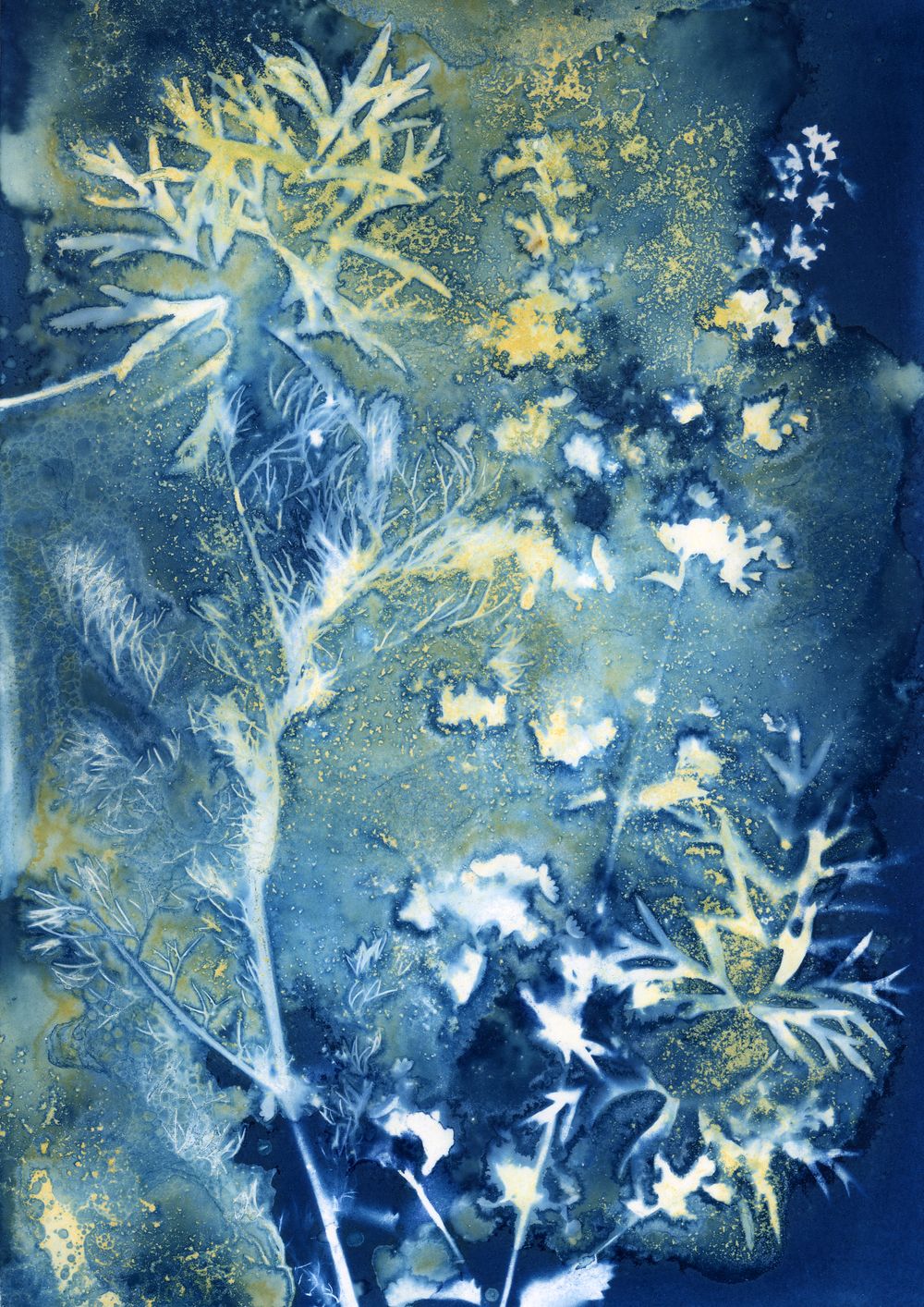
Cyanotypes
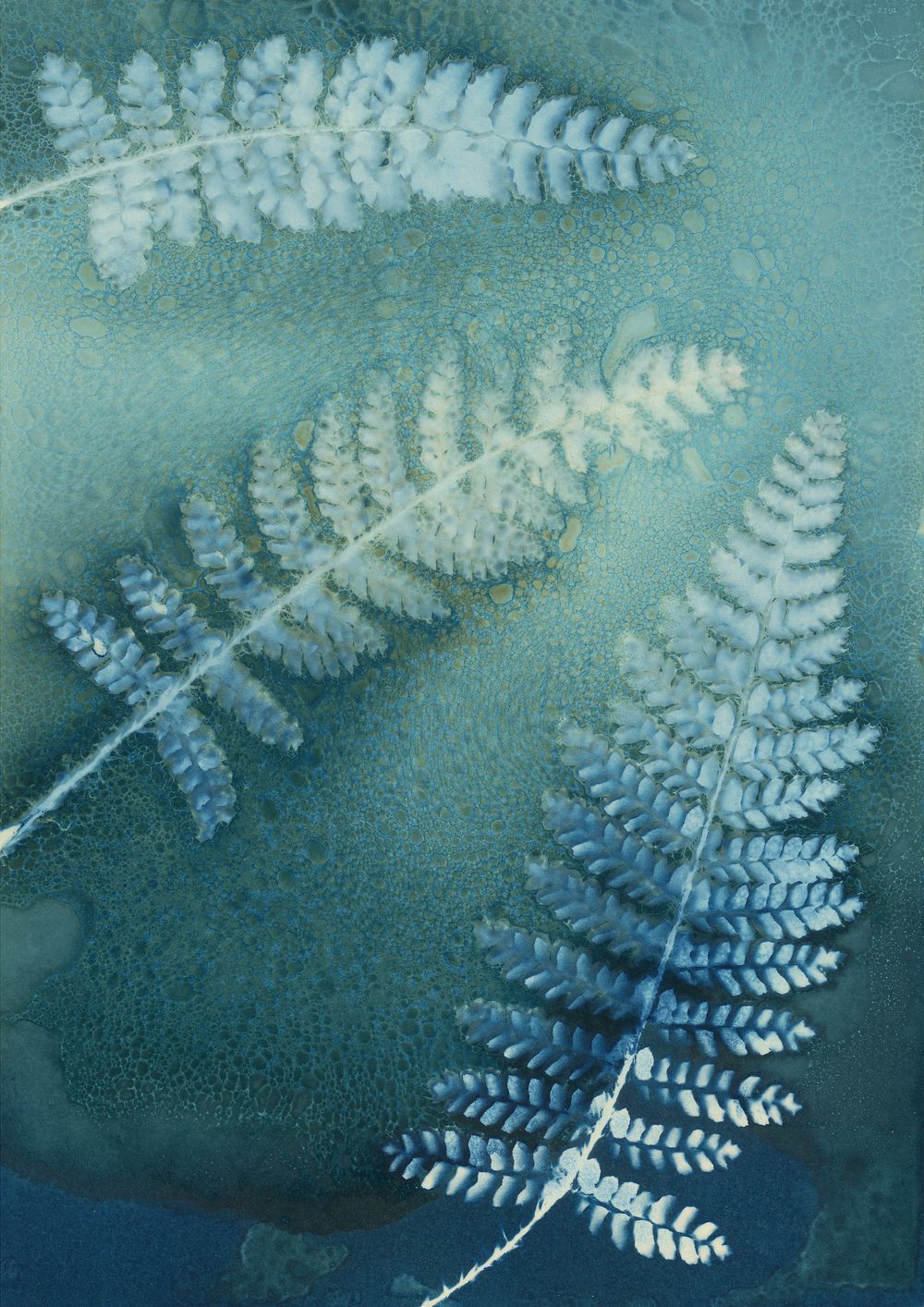
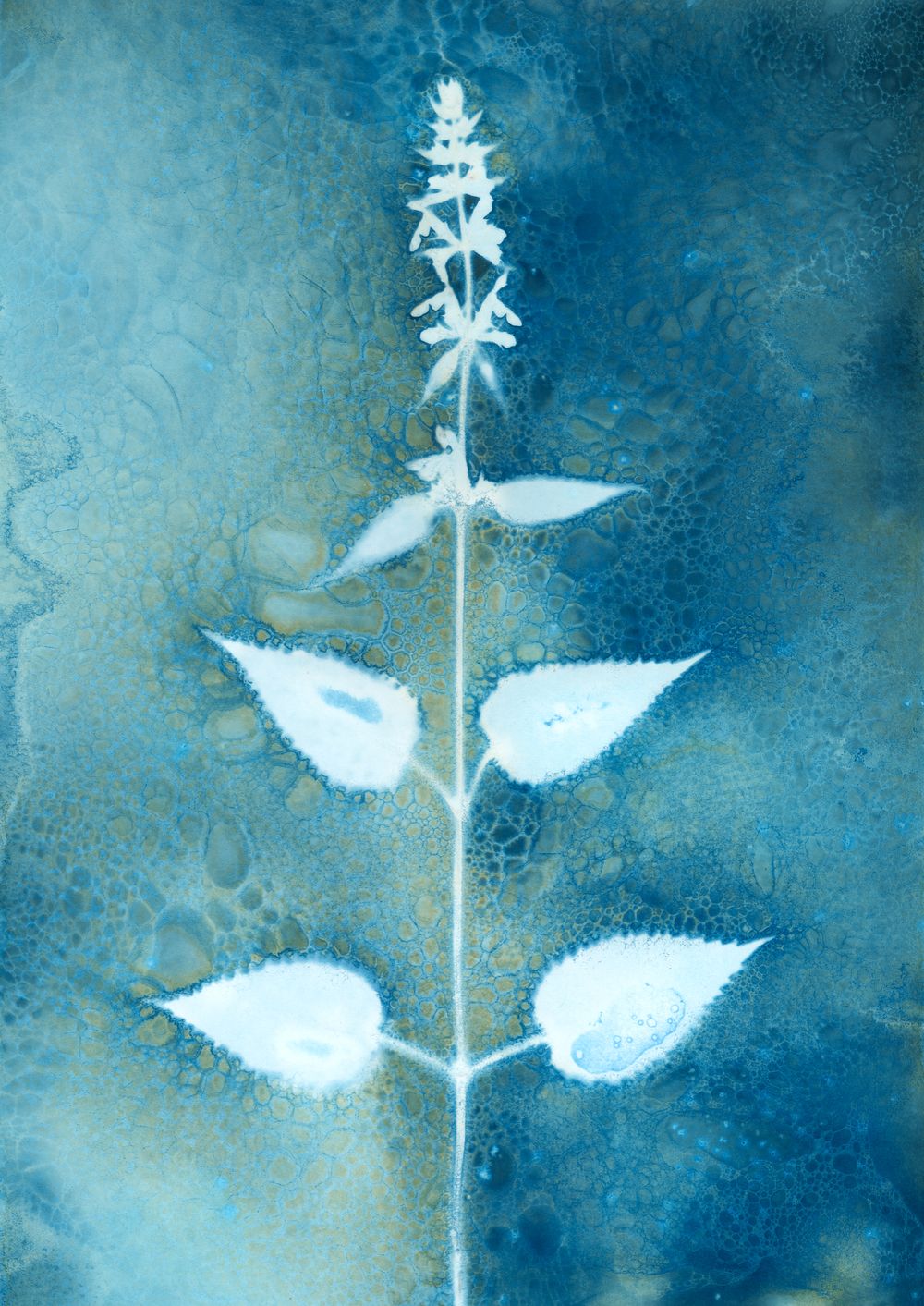
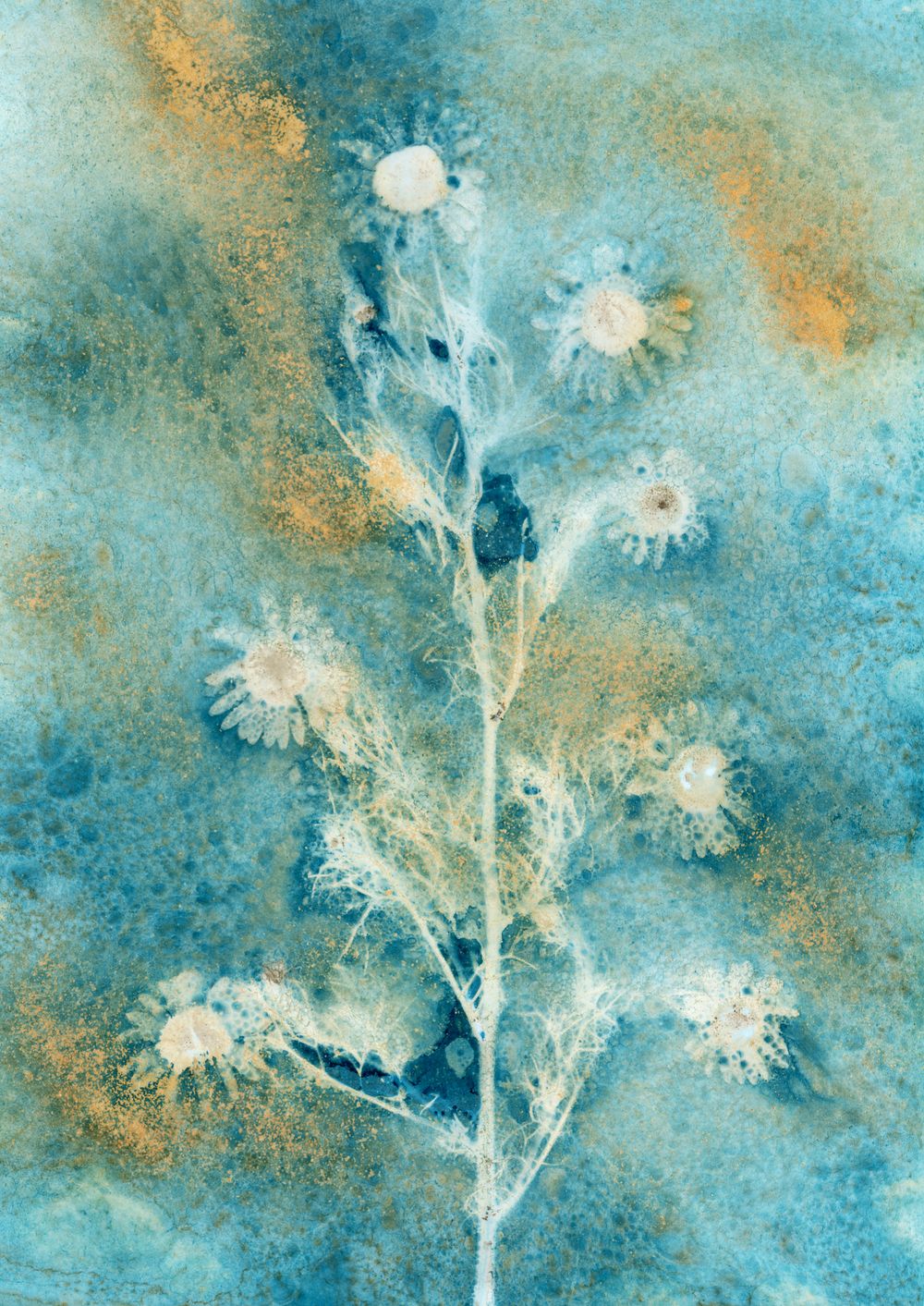
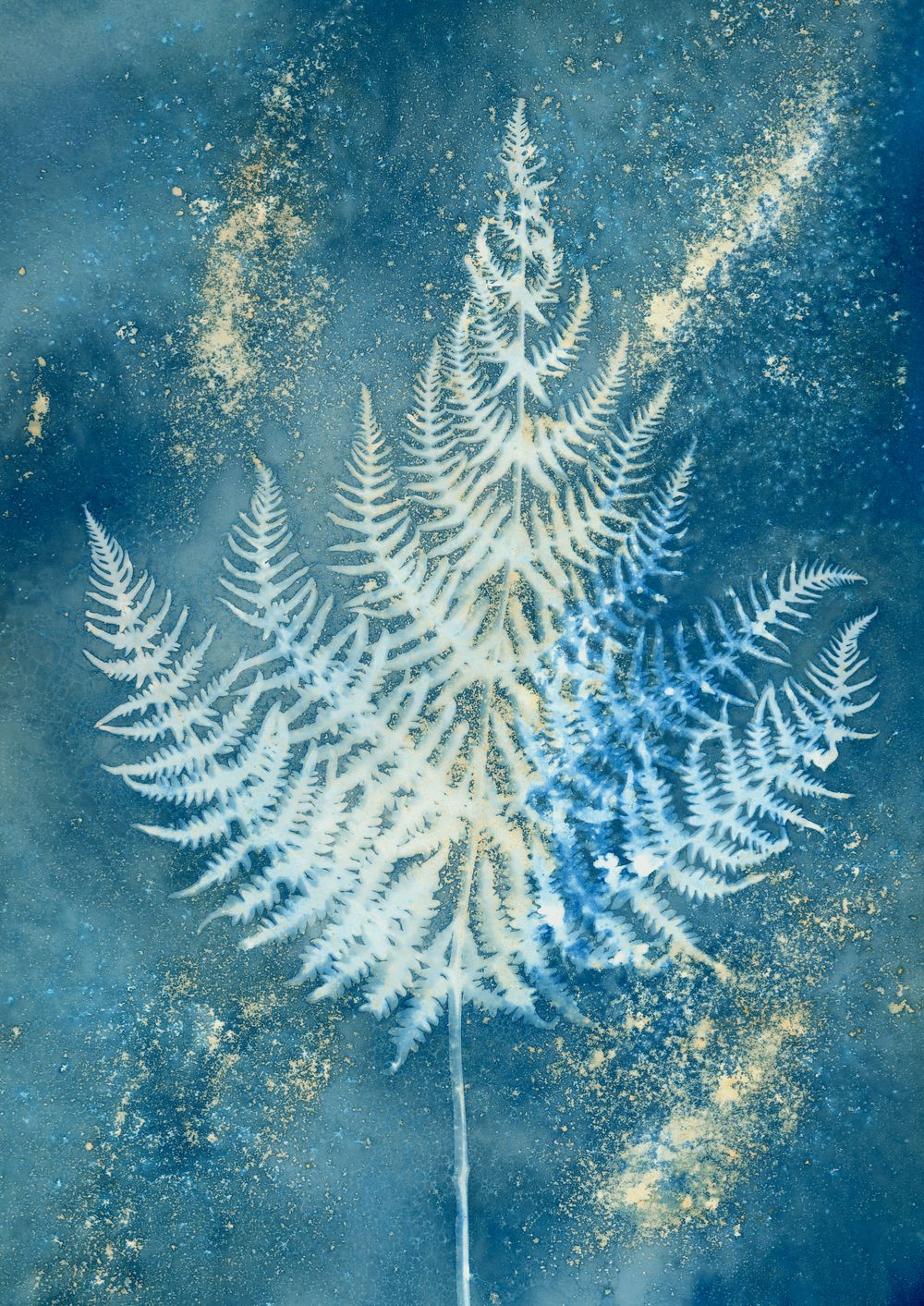
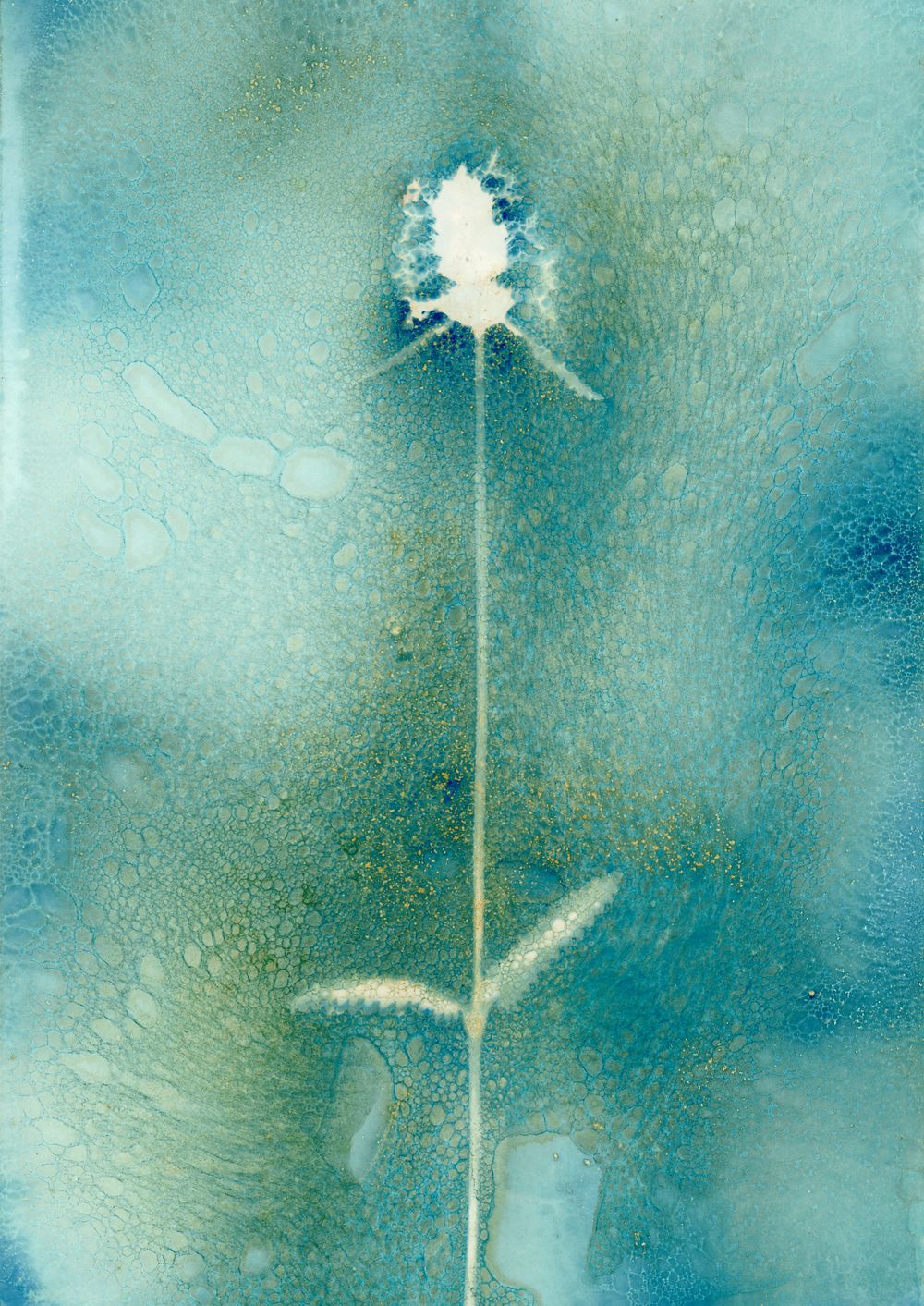
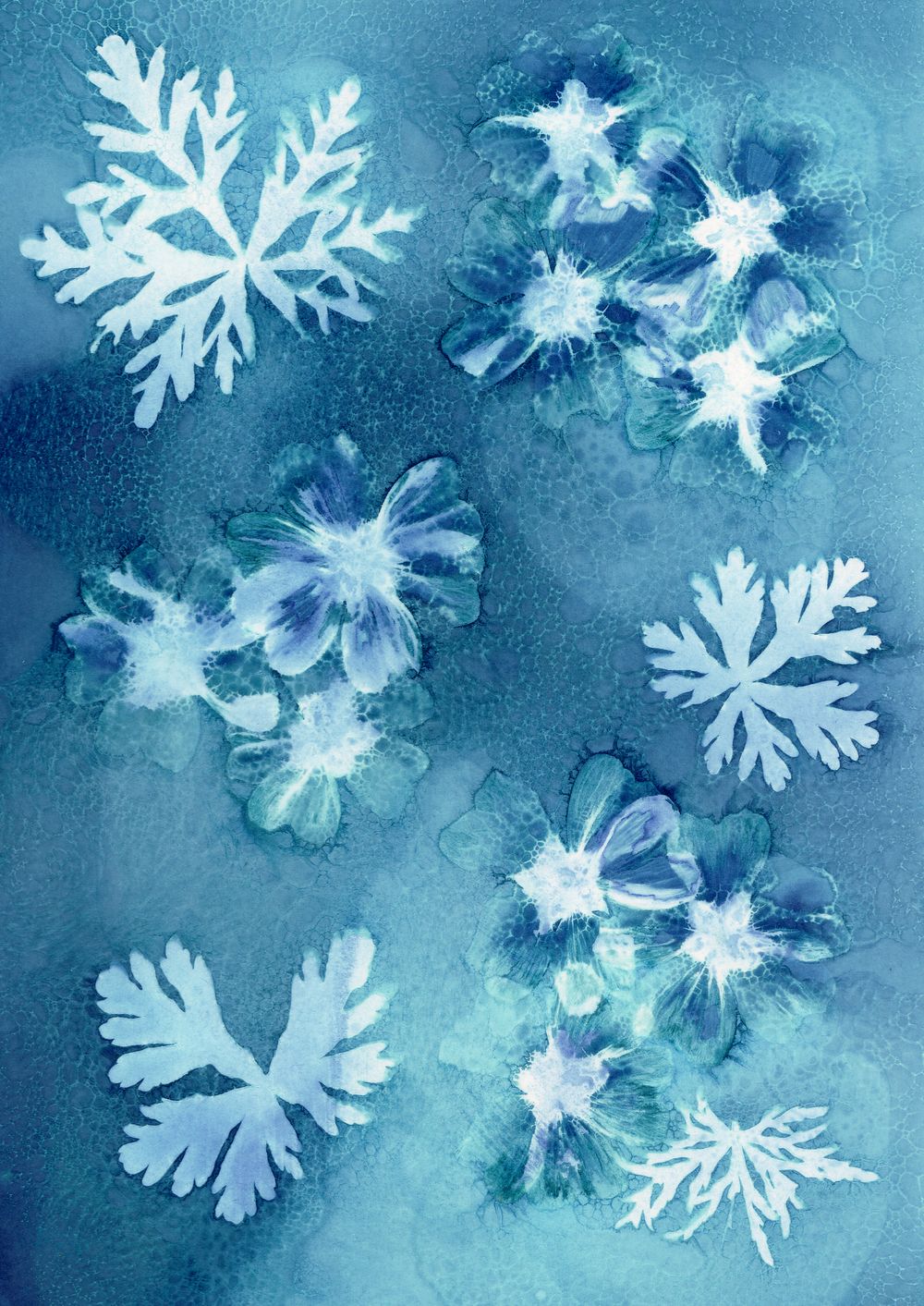
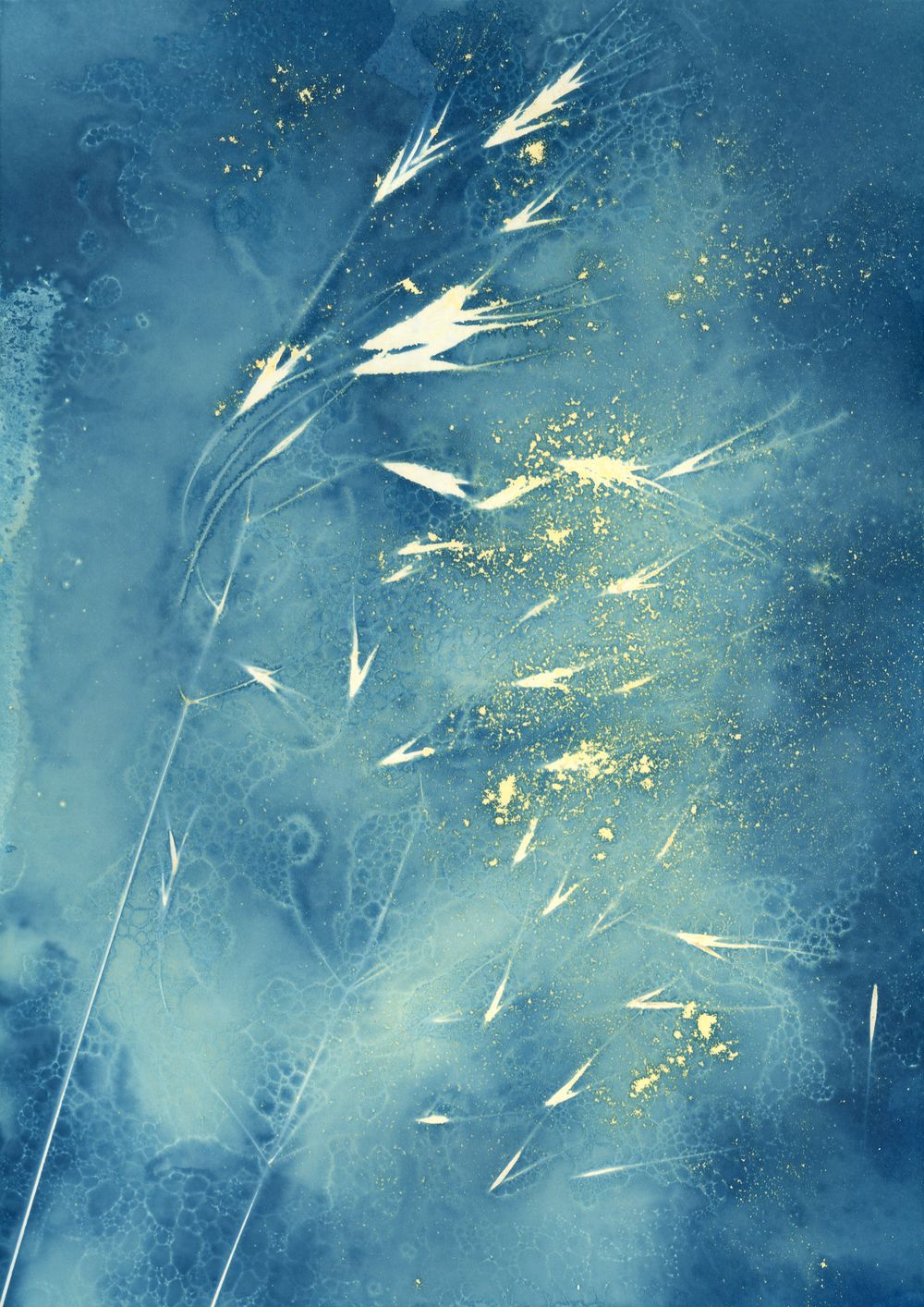
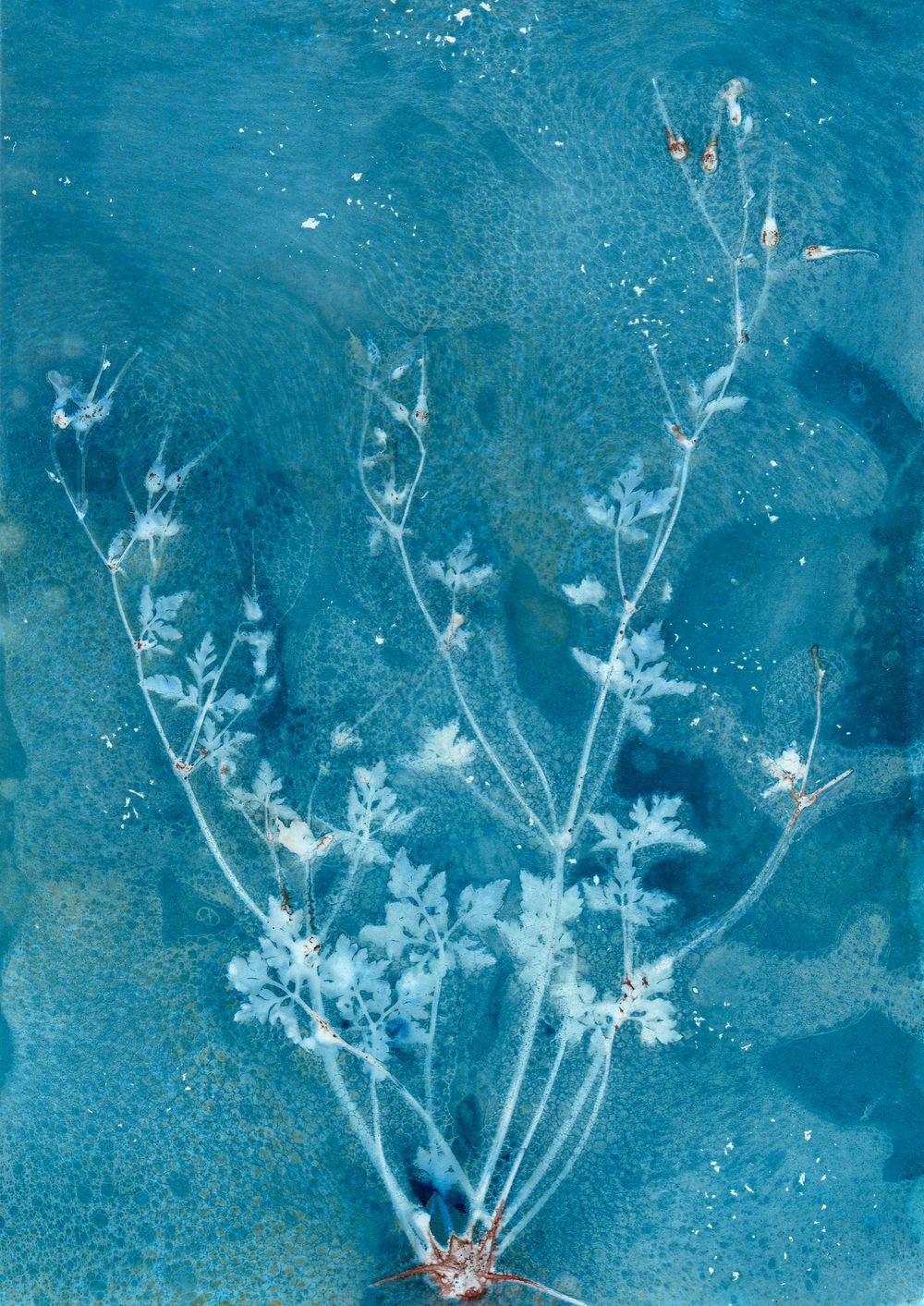
Cyanotype is an early, camera-less photographic process that produces a monochrome Prussian blue image. Invented in 1842 by Sir John Herschel, it involves coating paper with light-sensitive iron salts, placing objects on top, and exposing them to ultraviolet light (sunlight) to create white impressions on a rich blue background. The process was widely adopted for reproducing technical and engineering drawings, with the characteristic white line prints on a blue background becoming known as 'blueprints'.
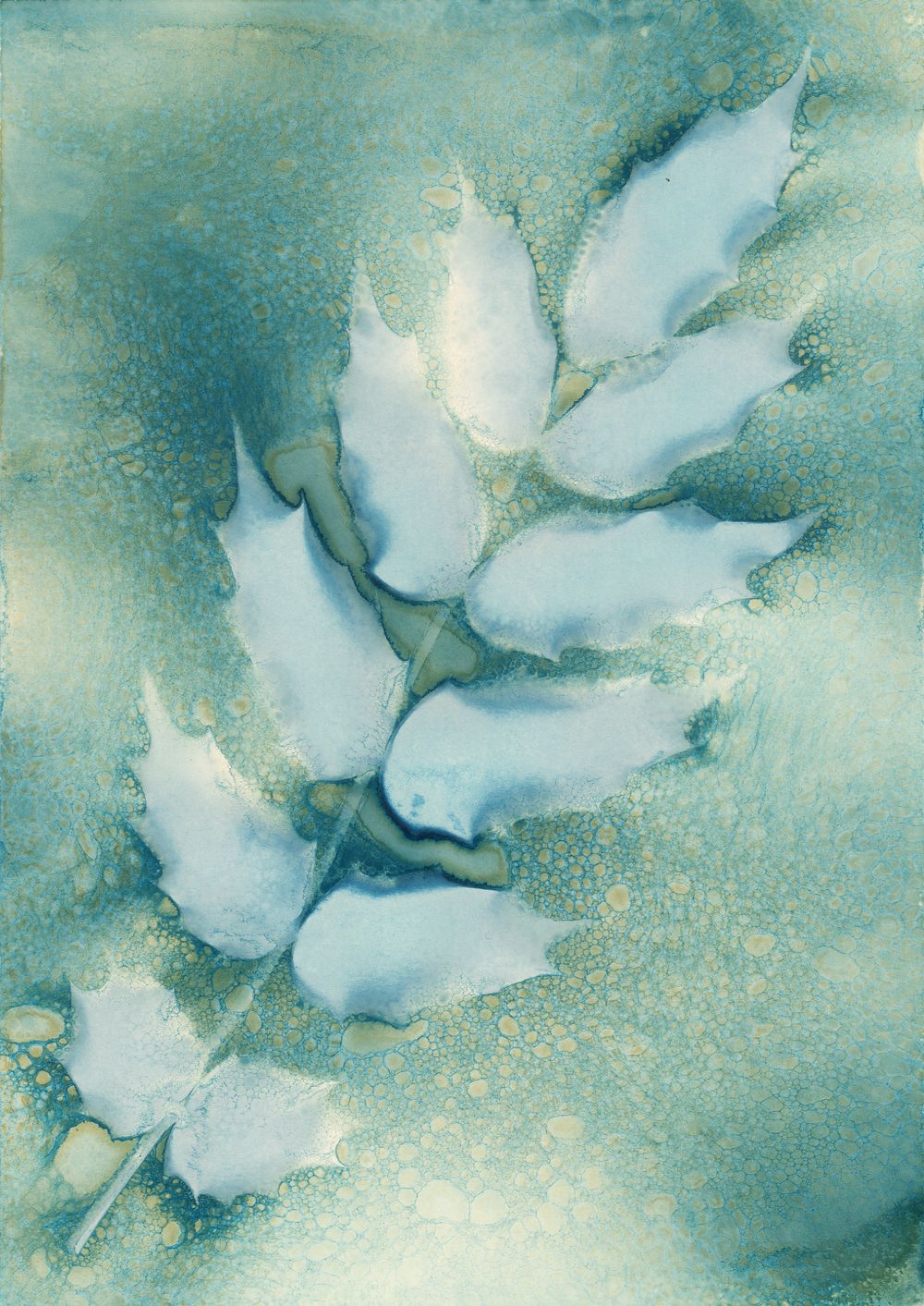
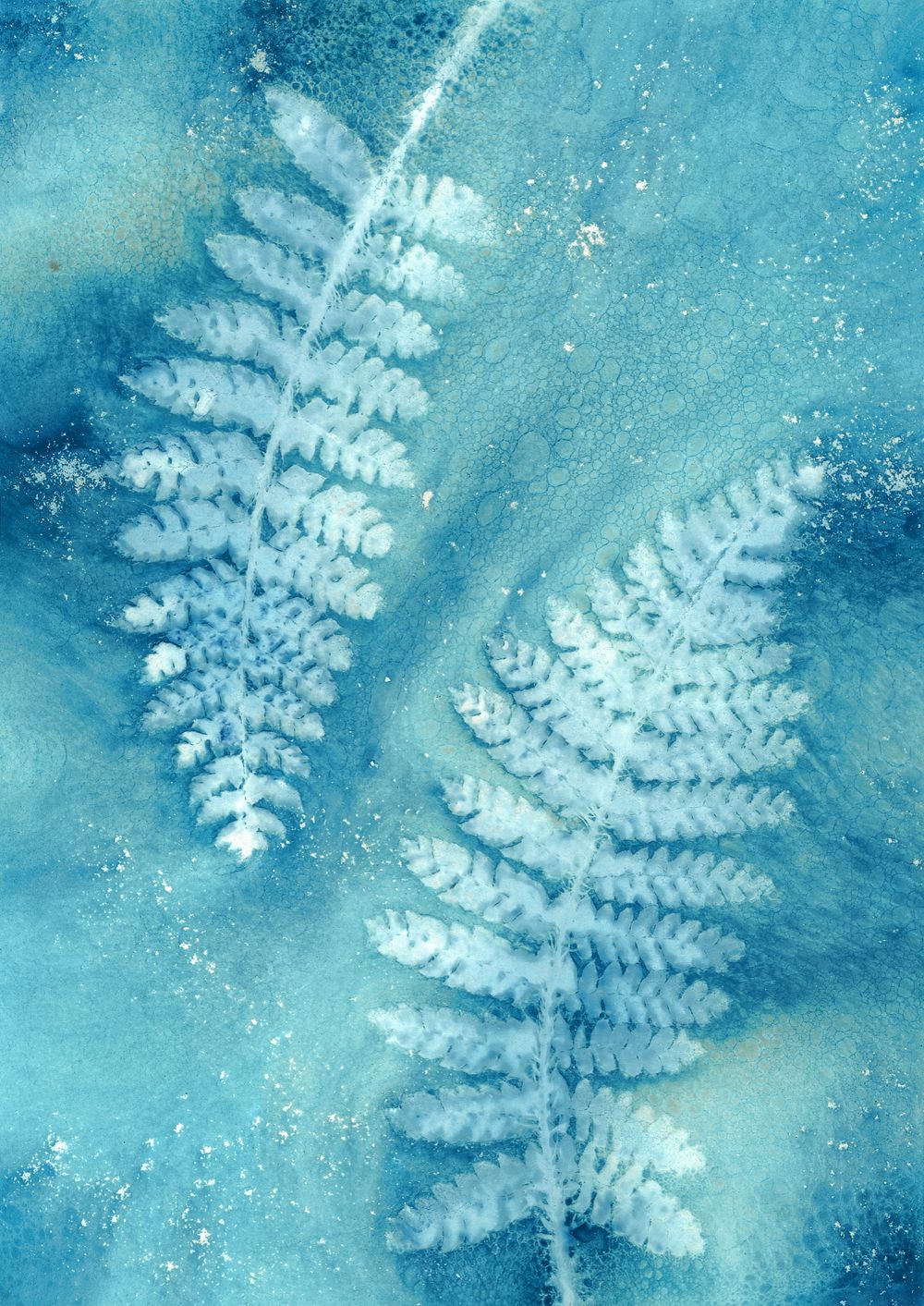
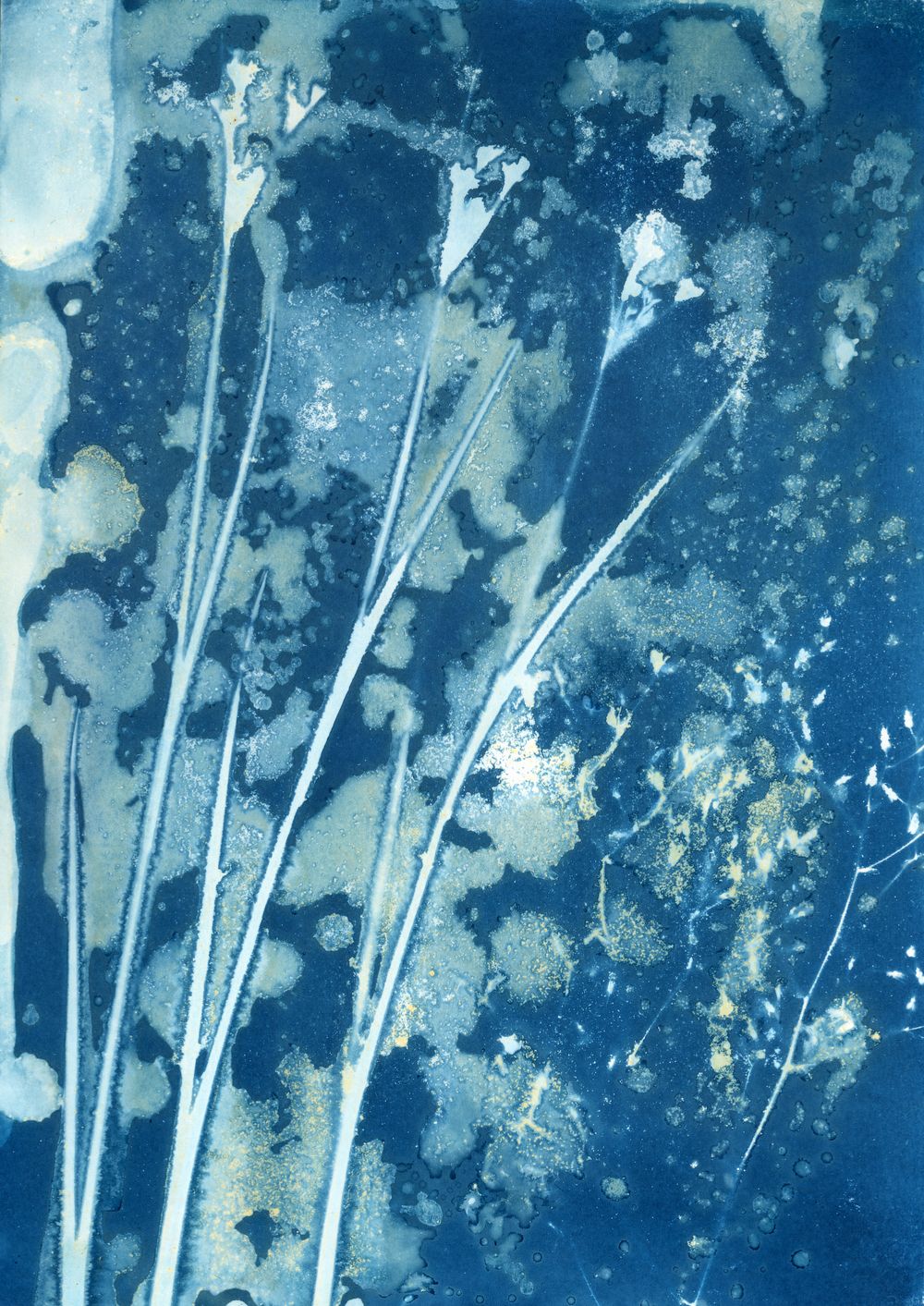
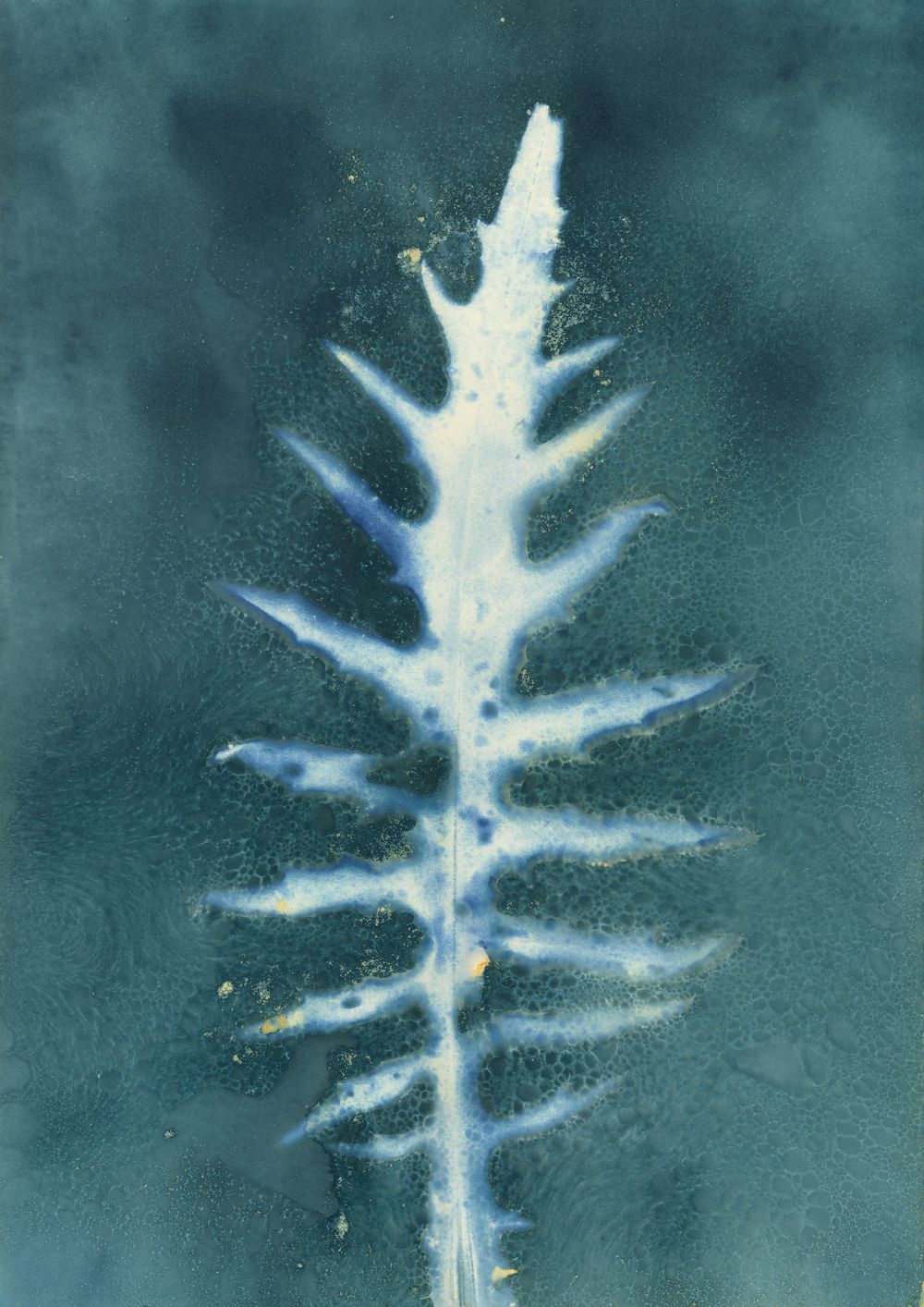
In a twist on the traditional cyanotype process, by exposing the sensitised paper while it is wet, and by adding other liquids and textural elements prior to exposure, unpredictable patterns and colour shifts can be created in the final print. Turmeric, salt, citric acid and soap suds are some of the items I use when creating wet cyanotypes of my local flora. Occasionally, a plant's own juices will also interact with the process, providing further interesting and serendipitous effects. Each cyanotype is produced on lightly textured watercolour paper and exposed in the South Shropshire sunshine. When developed and fully dry, they are digitally scanned. Editing is limited to minor colour and contrast adjustments as required, to ensure each digital image matches the cyanotype I hold in my hand as closely as possible. The original cyanotypes are unique and unrepeatable.